UKRAINE'S DEEP-ROOTED PROBLEMS | The Fedorov Dismissal and a Familiar Political Pattern
More than a Personality Clash, it is Ukraine's Battle Over Military Reform

A few days ago, I wrote that it was simply too early to draw firm conclusions about Ukraine’s unexpected government reshuffle. Too many commentators, many of whom are not even based in Ukraine, let alone familiar with the inner workings of the Verkhovna Rada or the realities of wartime decision-making, were rushing to definitive conclusions largely based on speculation. Others appeared more interested in generating clicks and followers than providing balanced analysis, offering absolute certainty despite having very little information to go on, and that was before the usual Russian sympathisers arrived with their remarkably repetitive refrain:
“Why don’t you go and fight then?”
I argued then that patience was the wiser course, and several days later, the chronology tells a far clearer story. Whether that story ultimately justifies the decisions being made is another matter entirely, for many questions remain unanswered. The dismissal of Defence Minister Mykhailo Fedorov has become one of the most politically contentious episodes of Ukraine’s wartime government. It has exposed divisions within the leadership, prompted demonstrations on the streets of Kyiv, reignited debate over the influence of the Presidential Office, and once again raised an uncomfortable question I have asked before:
Does Ukraine occasionally shoot itself in the foot politically?

A Reshuffle Few Expected
The first signs came as President Volodymyr Zelensky unveiled one of the most significant wartime cabinet reshuffles since Russia's full-scale invasion. I was actually out of the country, taking what was meant to be a rare couple of days away, when the news broke. Inevitably, the phone started ringing and I found myself being asked for my opinion.
“Government changes during a war are hardly unusual,” I said during my weekly report for Meidas News. “Leaders replace ministers, restructure departments and adjust priorities as circumstances evolve—particularly in a country fighting for its survival.”
That much was expected.
What surprised almost everyone, however, was the inclusion of Mykhailo Fedorov.
During his tenure, Fedorov became synonymous with Ukraine’s drive to modernise both government and defence. At the press conference following confirmation of his departure, he chose not to dwell on political disagreements but instead reflected on what his ministry had achieved during just six months in office.
“It was a great honour to serve the Ukrainian people as Minister of Defence.”
Rather than defending himself politically, Fedorov presented what was effectively a report card on his time in office.
He highlighted the successful effort to deny Russian forces access to Starlink, which he said had “dramatically reduced their ability to conduct an effective drone war.” He described inheriting a ministry under severe budgetary pressure before redirecting resources towards the technologies increasingly defining modern warfare—FPV drones, long-range strike systems, interceptor drones, unmanned ground vehicles and low-cost reconnaissance platforms. According to Fedorov, the ministry procured more drones in just four months than had been purchased during the previous year.
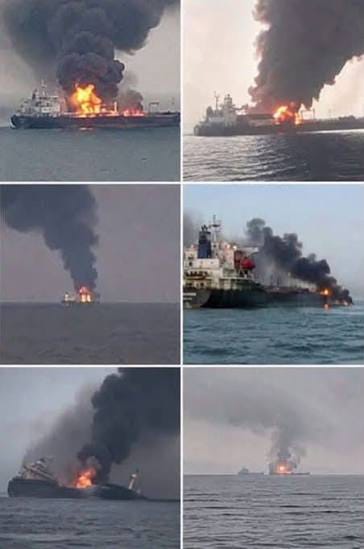
He also pointed to the launch of “Logistics Lockdown,” an initiative designed to systematically degrade Russian logistics. Combined with procurement reforms and increased support for Ukraine’s most capable drone units, he argued the programme had helped isolate Crimea and place sustained pressure on Russia’s ability to supply its forces in southern Ukraine.
Perhaps the most revealing part of his remarks, however, was not what he celebrated but what he acknowledged remained unfinished.
Fedorov openly admitted that he had not completed the Ministry of Defence’s organisational transformation towards NATO standards, had not yet moved all procurement onto fully competitive tenders and had not finished creating what he described as “a culture of responsibility for decisions made.”
It was an unusually candid assessment from a departing minister.
He concluded with what many now regard as the philosophy that defined his approach to the job:
“I will continue to work toward the mission I came to the Ministry of Defence with—to defeat the enemy through asymmetry, the speed of innovation and the strength of our organisation.”
Taken together, those achievements, and the acknowledgement of the work still left to do, help explain why Fedorov became one of the most recognisable figures behind Ukraine’s wartime military modernisation.
Which inevitably leaves the question that has dominated political debate ever since:
Why remove a minister who appeared to be delivering measurable results at precisely the moment technological adaptation had become one of Ukraine’s greatest strategic advantages?
Initially, there was no convincing public explanation and that vacuum quickly filled with speculation.

Friction Behind Closed Doors
As more information emerged, reports began pointing to growing disagreements between Defence Minister Mykhailo Fedorov and Commander-in-Chief General Oleksandr Syrskyi.
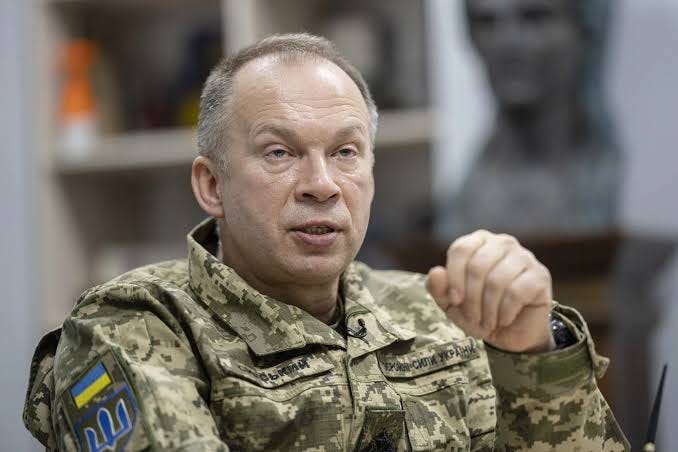
According to multiple reports, tensions had developed over military reform, procurement and the pace at which new technologies were being integrated into Ukraine’s armed forces.
Only those at the very top will know the full extent of those disagreements. The broader debate, however, is one I have witnessed firsthand since arriving in Ukraine in 2018.
My own experiences never involved Ukraine’s senior military leadership, nor decisions affecting the country’s survival as a whole, but they did expose a culture that many foreign advisers and experienced Ukrainian soldiers will immediately recognise—myself included.
Much of the resistance came not from frontline troops but from layers of middle management whose careers had been shaped by Soviet military doctrine. Centralised command, rigid hierarchy and an instinct to avoid initiative had been deeply ingrained over decades.